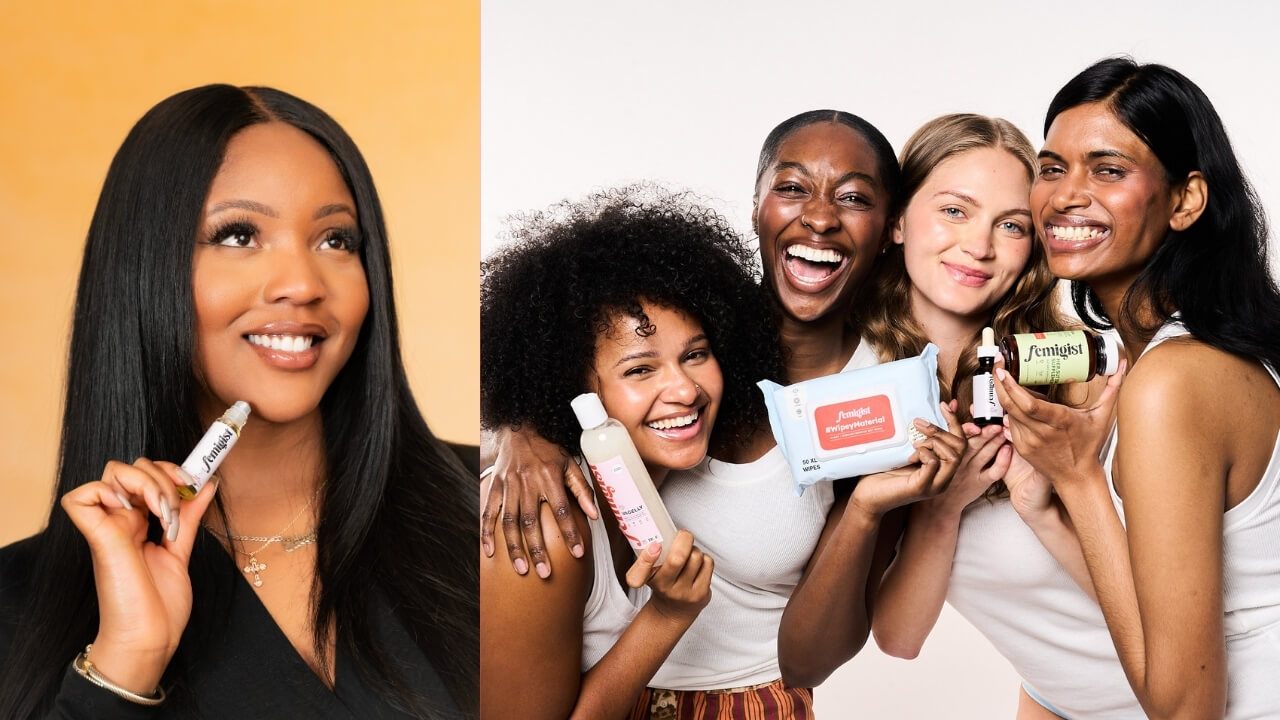
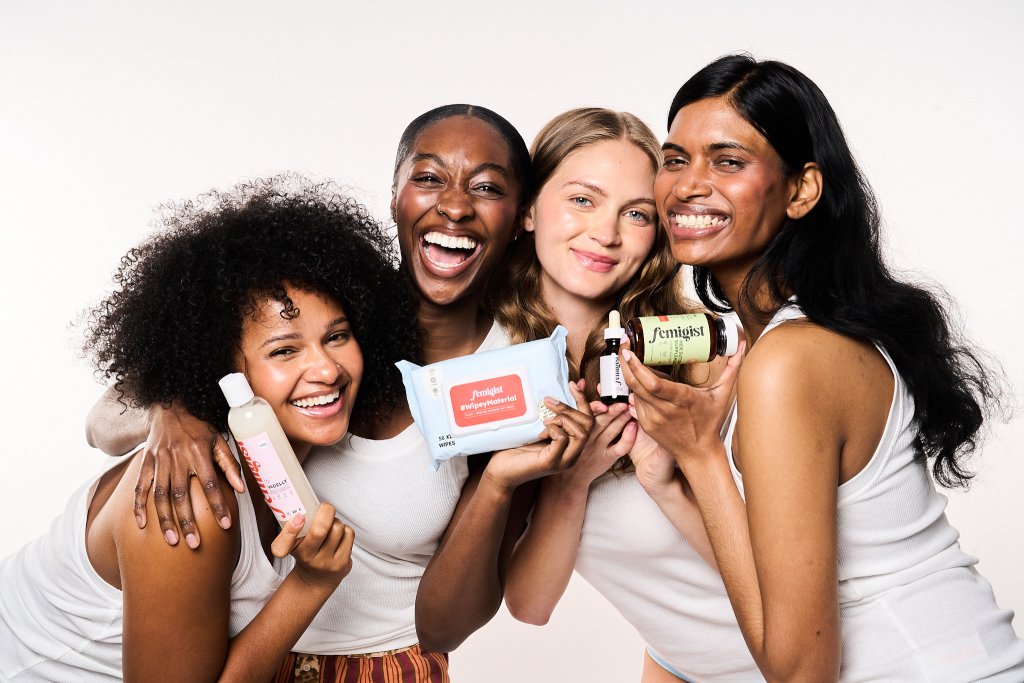
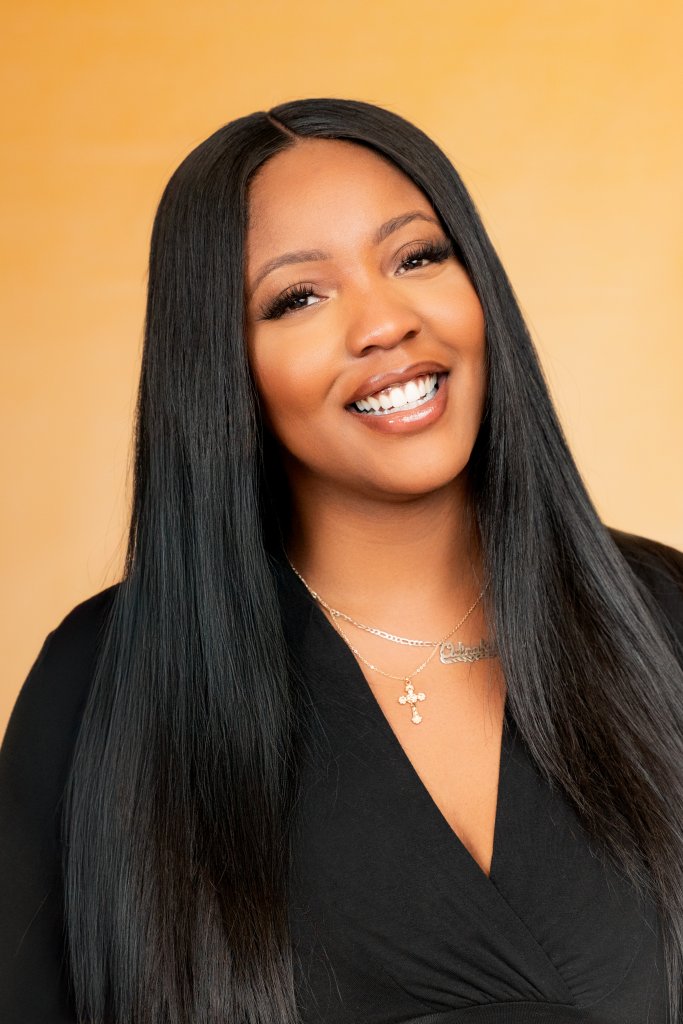
I’m SO excited to introduce you to our October Hey Helen Grant winner, Amara Onwukaeme 🎉 Amara is the founder and Chief Estrogen Officer (best title ever, I’ll fight anyone on it) of Femigist, a women’s hormonal wellness brand that builds complete systems for hormonal imbalance and its visible effects. When I first read her application, my honest reaction was “I don’t think I’ve ever heard of this as a concept before.” After talking with her, I’m convinced it’s something a LOT of women have been waiting for.
Women’s health has been underfunded and understudied for a long time, and that gap gets even wider for women of color. Amara is building Femigist as a direct solution to that as a bootstrapped founder, and she has a lot to teach anyone applying for grants right now.
Rather listen than watch?
LISTEN ON APPLE | LISTEN ON SPOTIFY
Three industries to solve one problem
Amara’s story starts with her own body. She’s dealt with hormonal issues since high school, though it took years to understand that’s what they were.
- In high school, she thought it was just acne
- In college, it became hair loss, which inspired her first company, The Headline, a hair extensions and wig brand she scaled before graduation
- In her mid-20s, it was facial hair
Everything she was dealing with looked cosmetic on the surface, and in a sense they were. But they were also her body’s way of signalling what was going on hormonally. When she went to the doctor, she left with prescriptions. (Anyone else leave the doctor feeling… less than heard?) But even then, she’d still find herself in the beauty aisle and she was still booking cosmetic treatments.
That’s when it clicked for her that the industry is completely fragmented.
She was looking toward THREE different solutions to deal with one issue… so she decided to simplify it. Femigist is built on her belief that women deserve simplified solutions for the things that most affect their lives.
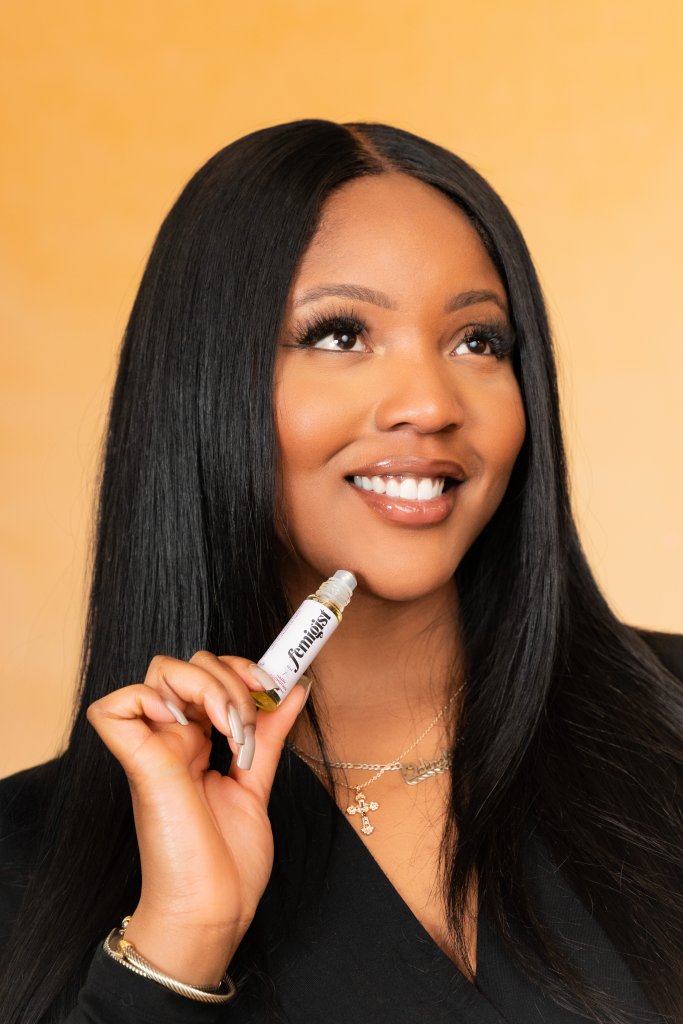
Femigist built for symptom first, from the inside out
Most brands in this space are organized by category (supplements over here, skincare over there). Femigist is organized by symptom, meaning it starts from how women actually experience hormonal imbalance in their skin and hair.
As Amara put it, you can use a topical all day and it won’t fix the underlying imbalance, and you can take supplements all day, but nobody is looking in the mirror at their acne thinking “oh, my androgens are high.”
Femigist works on both at once. This is the philosophy Amara calls “root to result relief.”
Building a brand for the most underserved consumer first
Amara’s grant application actually taught me something new. I grew up in my mom’s salon, so I knew that laser hair removal works less well when there isn’t much contrast between skin tone and hair color. What I didn’t know is that laser is heat-based and can actually BURN melanated skin 👀
That happened to Amara, which is part of why she created Hairy Godmother, her laser hair removal alternative (and my personal pick for best product name of all time TBH).
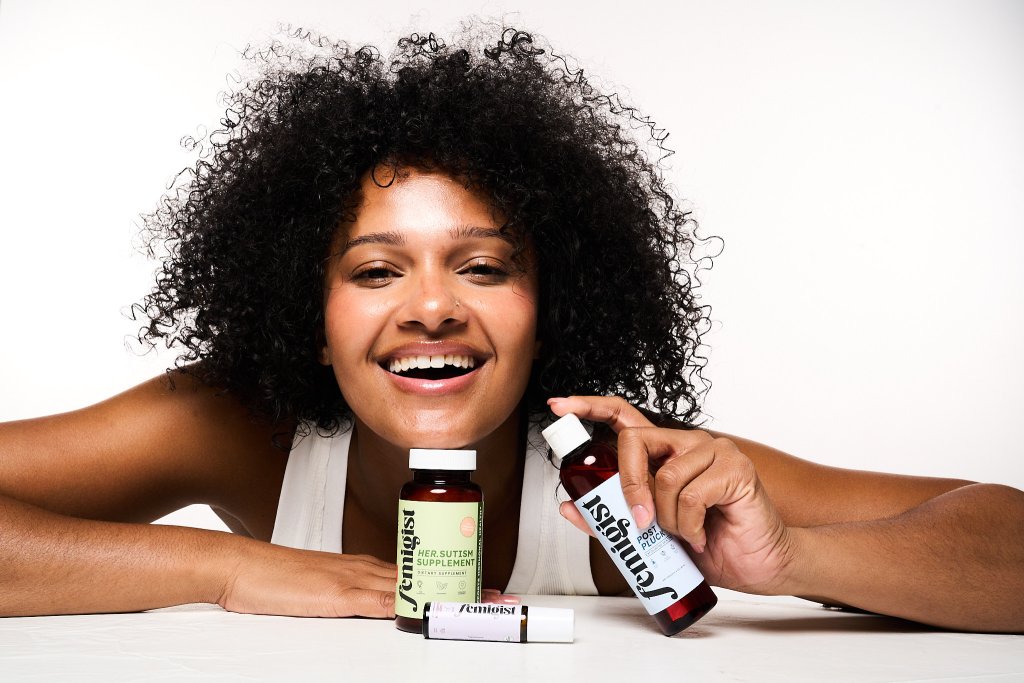
Her Three-Step Chin Kit offers a comprehensive solution:
- A hirsutism supplement that addresses androgens, the hormonal factors behind facial hair
- Hairy Godmother oil as the alternative to laser
- A post-pluck toner, because by the time you’ve plucked, you’re dealing with ingrowns, dark marks, and irritation (and curly hair and melanated skin make you more prone to both)
Amara formulates everything with the most underserved consumer in mind, which is often women of color and especially Black women. She shared that conditions like PCOS show up more often in Black women, partly because of a higher predisposition to insulin resistance. And she’s found that when you create an effective product for the most vulnerable consumer, you create a more effective product for everybody else. In her words, an emphasis on women of color isn’t exclusion. It’s what makes the product better.
Why Amara chose grants over investors
Amara has built Femigist entirely through bootstrapping, pitch competitions, and grants. She’s not ruling out raising someday, but right now she doesn’t want investors calling every day about numbers to hit while she’s still learning her market and her product.
Grants, for her, fund the learning stage. She described it as grant funders co-creating with her while she figures out what works, and she’s intentionally built the company with discipline instead of chasing a big institutional round for the vanity of it. She knows how serious the problem she’s solving is, and she wants to solve it better than anyone else.
There’s another issue entirely though, and that’s that oftentimes when pitching, you need to understand the data…
And data around women’s hormones are… scarce.
Amara pitches Femigist a lot, and in pitch competitions she kept running into the same wall: judges asking for market data. What’s the market size? Where are the studies?
Eventually she just started being candid with them.
There’s no data because people have historically overlooked women. Clinical research has focused on a narrow subset of women, and for decades much of women’s health research centered on pregnancy. The companies being built now are the ones creating the data in real time, and Amara sees that as a huge opportunity for women’s health brands to shape where wellness goes next.
I got on my soapbox a bit here, because she’s right.
The brands solving women’s health problems, especially those led by women and women of color, are going to win in the long run. The need is enormous. But the funding gap is real and, from where I sit, getting worse – only around 2% of venture capital goes to women-founded companies, and with so much money chasing AI right now, I worry that number is heading down. Just because nobody has measured the addressable market doesn’t mean it isn’t out there.
How the Hey Helen Grant will help Amara’s next steps
Amara’s grant funds are going toward inventory and supplies for a distribution partnership with a MAJOR beauty retailer, which she’ll announce soon. (Hang tight with me on that one because while we aren’t allowed to say what this is yet… trust me, we’ll let ya know! 👀)
But that is NOT what she originally applied with, and I wanted to clear up a couple of things here, because we get the same questions constantly.
And I can already hear the wheels spinning of people thinking that because they don’t have something flashy happening, like a major retail partnership, their grant application won’t be as attractive.
Lemme stop ya right there 😅
Amara’s original use of funds was research.
She planned to invest in a research and development partnership with an institution to lay the groundwork for a future product launch. It didn’t come with a shiny “look where you’re about to find us” moment.
What it DID have was a clear explanation of how it would move the business forward. (Which you MUST have to be the most competitive for grants.)
Amara said it herself: there’s no single way to be validated in your use of funds, as long as you can show how it moves the needle.
And for anyone connecting dots, yes, Amara was also one of our V-List Honorees and was our Beauty Spotlight Award winner. That had *nothing* to do with her winning the grant. (The potential overlap is that if you know how to write a strong grant application, you probably know how to write a strong awards application too.)
Amara’s advice for writing a winning grant application
This is where I’d grab a pen because she gave excellent advice.
Articulate the impact of wining a grant
Saying “this grant will help with marketing” isn’t enough. What will additional marketing unlock? What are your KPIs? What does success look like?
Funders want to see that their money is going to DO something, and they’re going to check back in (we will literally talk to Amara again in six months).
Quantitative data matter for grant applications
Figure out your numbers. If a piece of technology will save you five hours a week, say so. If you can back it up with historical data, even better. Story is great, but numbers are great too.
And wherever possible, use data to tell a story. (That’s my addition to this point!)
The use of funds is the first thing we look at, and it’s the one place where you should… in fact… say MORE.
You can also make the case for savings. Growth isn’t the only compelling case. If you’re overspending because you don’t have the right systems or infrastructure, showing how much more profit you’d keep by fixing that is a strong argument too. Look at what your business actually needs.
Write your grant application from the heart
Amara’s line here stuck with me…
She said, “you can’t outsource soul, and you can’t outsource conviction.”
(Guys, I LOVE this SO much.)
In pitch competitions, people (often men who can’t personally relate to her product) come up to her and say “I really believe in you.” Data doesn’t have a pulse, and neither does AI. You do.
I’ll add what I say over and over, broken record style: funders fund founders, not ideas.
Your passion and your reasons for building this have to come through on the page. And speaking for Hey Helen specifically, I would MUCH rather read your typos and long rambly sentences (I write those constantly if you can’t tell) than a perfectly polished AI application that tells me nothing about you.
What’s next for Femigist?
Amara’s vision is for Femigist to be alongside women through their entire hormonal journey, from puberty all the way through menopause. Facial hair is the entry point. Hormonal acne is next, then hormonal hair loss, with cramps and menopause solutions on the longer-term map.
Each symptom gets its own “world,” as she puts it, with its own infrastructure.
For facial hair, that means meeting women where they already are, which includes the waxers and estheticians they see every few weeks. Amara pointed out that there are twice as many hair removal salons in the US as Starbucks locations, which is a LOT of places her customer already shows up.
Key takeaways
- Femigist is symptom first, treating hormonal imbalance from the inside out while caring for what women see in the mirror
- Building for the most underserved consumer creates a better product for everyone
- When the data doesn’t exist, being candid about why can be a powerful answer
- Grants can fund your learning stage without the pressure of investor expectations
- Your use of funds doesn’t need to be flashy, but it does need to be specific, measurable, and clear about impact
- Cost savings make a strong case, not only revenue growth
- Write like yourself, because your conviction is the part nobody else can copy
Connect with Amara:
- Visit Femigist on the web
- Femigist Three-Step Chin Kit
- Femigist on TikTok (@xoxofemigist)
- Femigist on Instagram (@femigist)
- Connect with Amara Onwukaeme on LinkedIn
Interested in applying for the Hey Helen Grant?
We’re funding impact-driven businesses through our grant program, offering support in the amount of $10,000 each round — and soon, every single month!
The Hey Helen Grant is open to any 100% woman-owned, US-based, for-profit business doing less than $1M annually. Learn more about the Hey Helen Grant and start your application here.